What Is a Trading Strategy and Why Is It Essential?
A trading strategy is a systematic approach to buying and selling financial assets, such as stocks, forex, or cryptocurrencies, based on predefined rules and analysis. It serves as a blueprint for traders, outlining when to enter or exit trades and how much capital to allocate.
Having a clear trading strategy is crucial for achieving consistency and reducing emotional decision-making. Without a strategy, traders may fall prey to impulsive actions, resulting in losses. A well-defined plan enables traders to measure performance, refine methods, and achieve long-term success.
What Is Backtesting and How Does It Work?
Backtesting is the process of evaluating a trading strategy's performance using historical market data. By simulating trades in past conditions, traders can determine whether their strategy would have been profitable.
What is an example of backtesting?
Suppose a trader wants to test a moving average crossover strategy. They would analyze historical price data to see how the strategy performed in terms of profitability, drawdowns, and consistency.
How does backtesting help traders?
Backtesting helps traders build confidence in their strategies, identify flaws, and optimize performance before risking real capital in live markets.
Key Benefits and Drawbacks of Backtesting
Benefits of Backtesting:
- Data-Driven Insights: Backtesting provides objective data on a strategy's historical performance.
- Risk Reduction: Traders can identify potential pitfalls without financial loss.
- Optimization: By analyzing results, traders can fine-tune strategies for better outcomes.
Drawbacks of Backtesting:
- Overfitting Risk: Strategies may perform well in backtests but fail in live markets due to excessive optimization.
- Data Accuracy: Poor-quality historical data can skew results.
- Market Evolution: Historical conditions may not always reflect future market behavior.
Step-by-Step Guide: How to Backtest Your Trading Strategy
How to manually backtest a strategy:
- Choose a Market and Timeframe: Select the asset and time period for testing.
- Gather Historical Data: Use reliable data sources for accurate testing.
- Simulate Trades: Apply your strategy to the historical data manually, noting entries, exits, and outcomes.
- Record Results: Track performance metrics such as win rate, profit factor, and drawdowns.
For a complete worked example with exact entry, exit and position-sizing rules, see our step-by-step trading strategy development guide.
How to backtest a trading strategy for free:
ForexThrive's free plan (Google sign-in, no credit card) includes the full replay engine in one predefined game (Feb 22 – May 23, 2022) with FX majors, crypto and FX futures. Creating your own games with custom dates and trading conditions requires a prepaid plan ($8–$23/month equivalent, never auto-renewing). TradingView's free plan also includes basic strategy testing.
Can you backtest on TradingView for free?
Yes, TradingView's free plan includes the Pine Script strategy tester and a limited Bar Replay mode. Some replay features, such as intraday timeframes, require a paid plan.
Best Practices for Interpreting Backtesting Results
How to analyze and learn from backtesting data:
Focus on Key Metrics: Analyze win rate, average profit per trade, and maximum drawdown. Consistency Over Profitability: Prioritize strategies with stable performance over time.
Tips for reducing bias during backtesting:
- Avoid cherry-picking data or optimizing for specific market conditions.
- Test across various market cycles to ensure robustness.
How far back should you backtest?
It depends on the strategy and market. For long-term strategies, several years of data are ideal. Shorter-term strategies can generate a large sample of trades from less data, but the test should still span different market conditions (trending, ranging, high and low volatility). A few quiet months can badly mislead.
Is 100 trades enough for backtesting?
While 100 trades can provide insights, a larger sample size often yields more reliable results.
Popular Trading Strategies for Beginners and Pros
What is the 1% rule in trading?
The 1% rule limits risk per trade to 1% of the trader's total capital, ensuring manageable losses.
Which trading strategy is best for beginners?
- The 5-3-1 Strategy: Focuses on 5 currency pairs, 3 strategies, and 1 fixed time of day to trade.
- Swing Trading: Ideal for beginners, this strategy involves holding positions for several days to capture medium-term trends.
What strategies do professional traders use?
- Scalping: Capitalizes on small price movements in short timeframes.
- Trend Following: Profits from sustained market trends.
- Mean Reversion: Assumes prices will revert to their average over time.
What Makes a Trading Strategy Profitable?
Key Elements of Successful Strategies:
- Clear Rules: Define precise entry and exit criteria.
- Risk Management: Employ stop-loss orders and position sizing techniques.
- Adaptability: Adjust strategies to align with changing market conditions.
Identifying Profitable Strategies:
Look for strategies with positive expectancy (a reward-to-risk ratio that fits their win rate), consistent performance across market conditions, and minimal drawdowns.
ForexThrive: The Ultimate Tool for Trading Strategy Development
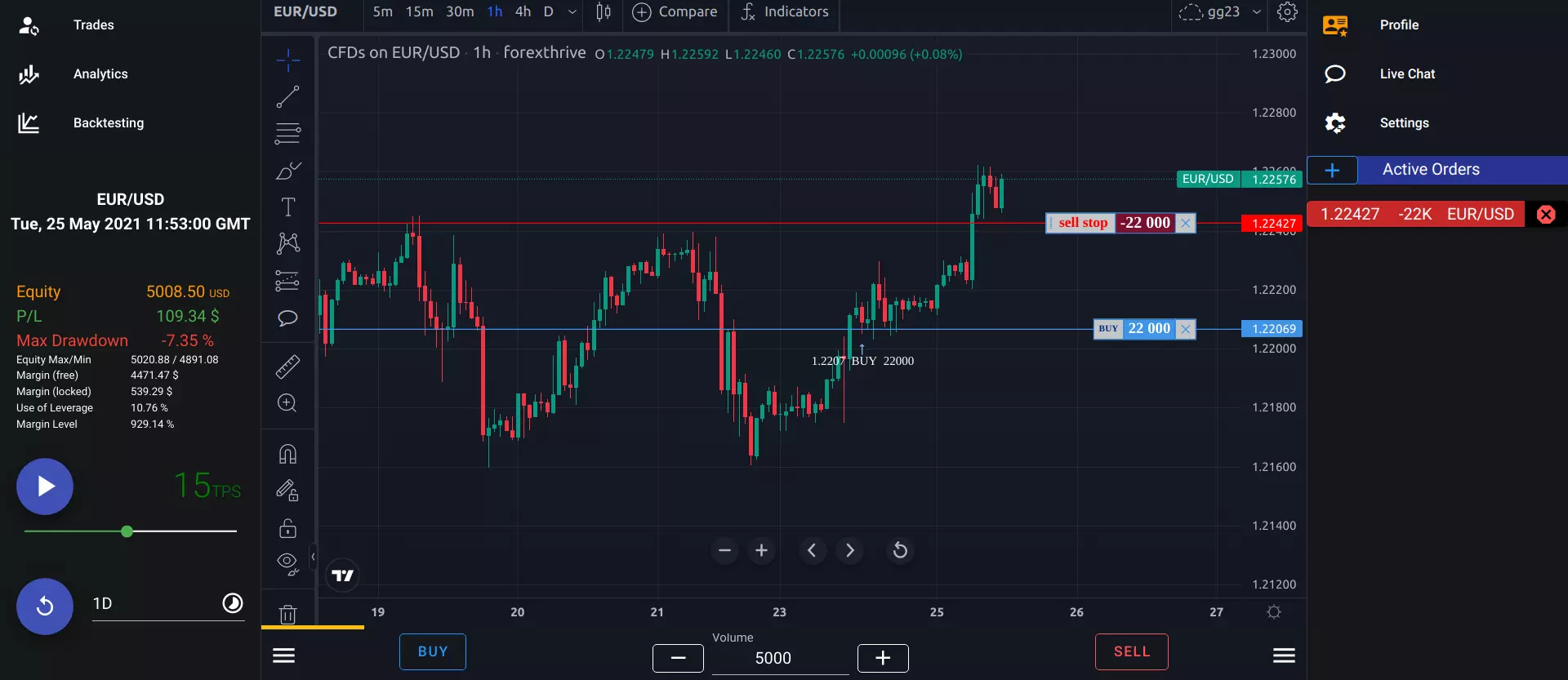
ForexThrive is a web-based backtesting platform designed to streamline strategy development. Key features include:
- Web-Based Backtesting Engine: Accessible without software installation.
- Full Replay Engine: Speed control, indicators, multi-chart layouts, an economic calendar, an AI assistant, live analytics and exports, all included on the free plan.
- 15+ Years of Historical Data: Prepaid games can start as far back as 2006, covering multiple market cycles.
- Backtest to Forward Test: Prepaid games can end up to one year in the future. When the replay reaches the present, it switches to 1-minute-delayed live data in the same session.
Why ForexThrive's backtesting engine is superior:
ForexThrive combines ease of use with advanced analytics, making it an ideal choice for both beginners and experienced traders.
Benefits of forward testing in the same session:
Because the replay switches to live data when it reaches the present, you can keep trading the same rules on market data you haven't seen yet. It's the best check that a backtest wasn't just fitted to the past. This is a prepaid-plan feature, and the replay only runs while the app is open.
Why Backtesting Is Worth Your Time and Effort
Backtesting plays a critical role in refining trading strategies, boosting trader confidence, and improving profitability. It allows traders to learn from past performance and avoid costly mistakes in live markets.
Insights from professional traders highlight backtesting as a cornerstone of successful trading. By dedicating time to thorough backtesting, traders can achieve consistency and long-term success.
FAQs
How long does backtesting take?
It depends on the complexity of the strategy and the amount of data being analyzed. Automated tools can significantly speed up the process.
What are the risks of backtesting?
Overfitting, inaccurate data, and the inability to account for future market changes are common risks.
How to backtest futures and market-making strategies?
Use specialized platforms with futures and market-making capabilities, ensuring access to detailed historical data.
Is day trading worth it?
Day trading can be profitable but requires discipline, quick decision-making, and thorough preparation, including backtesting.
Frequently asked questions
Can I backtest for free on ForexThrive?
Yes. Signing in with Google gives you a free account with one predefined game (Feb 22 – May 23, 2022), covering FX majors, crypto and FX futures with the full replay engine. Creating your own games, choosing dates back to 2006 and customizing spread, leverage and commission require a prepaid plan.
What is overfitting in backtesting?
Overfitting is tuning a strategy so closely to past data that it captures noise rather than a repeatable edge. It looks excellent in the backtest but fails live. To reduce it, keep rules simple, test across different market conditions, and forward-test on data the strategy has never seen.
Is 100 trades enough for a backtest?
100 trades gives a first read on win rate and drawdown, but results from small samples swing a lot. A larger sample spread across trending, ranging and volatile periods is more reliable, and a forward test on new data is the final check.
What is the 1% rule in trading?
The 1% rule caps the risk on any single trade at 1% of account equity, measured as the loss if the stop-loss is hit. Even a streak of ten losses then costs under 10%, which keeps drawdowns recoverable.